
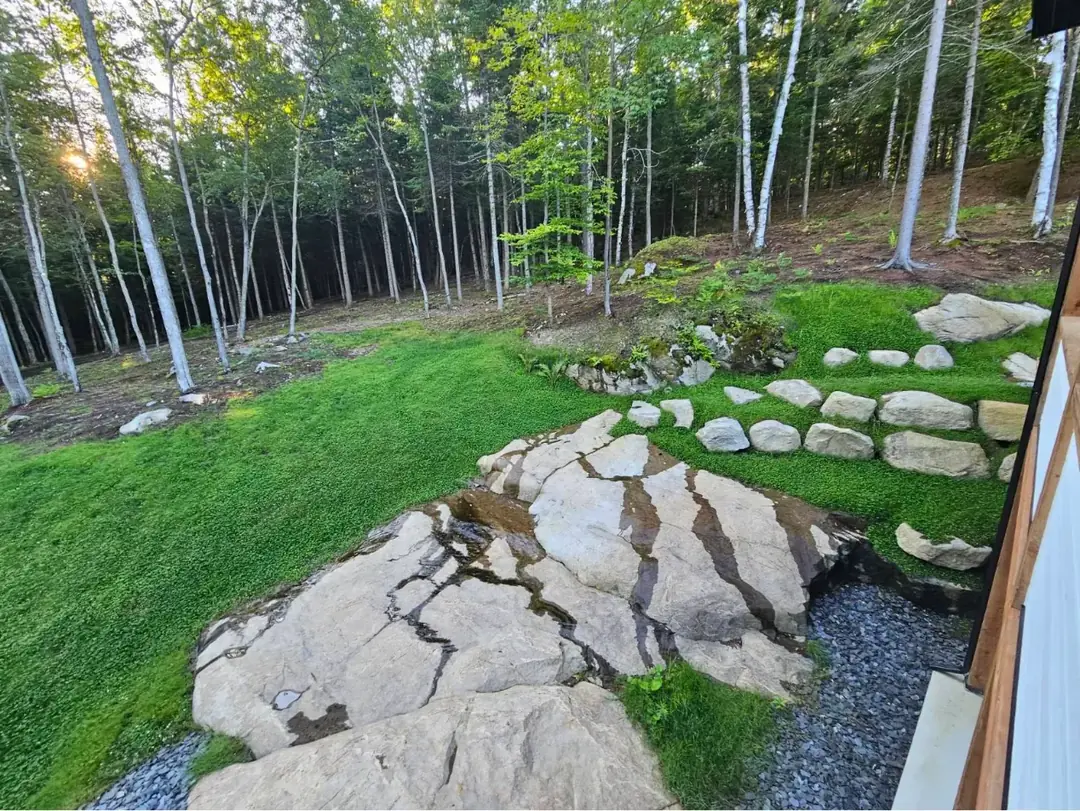
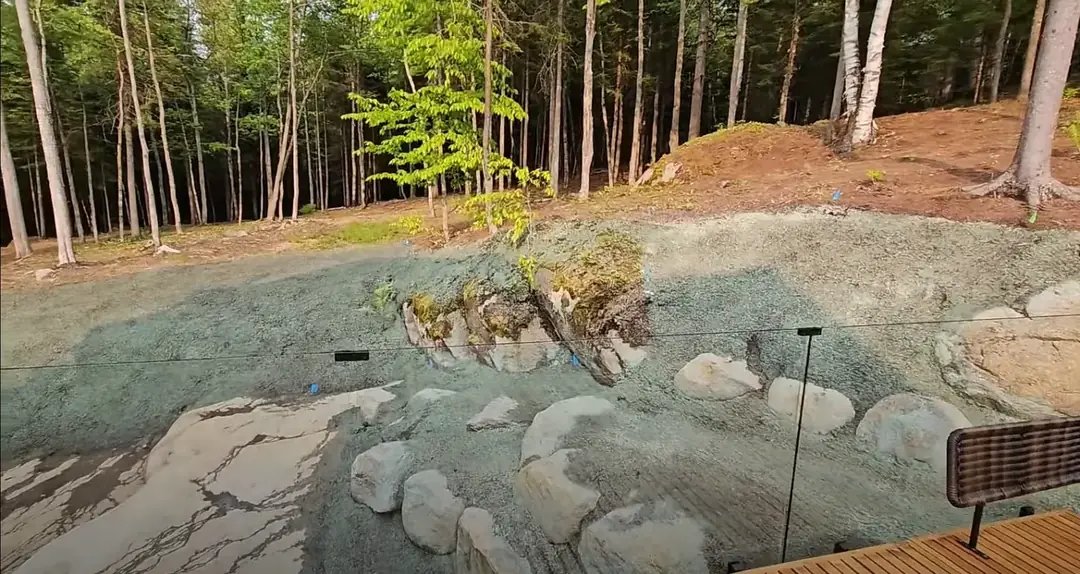
Why hydroseeding is made for slopes
- The mulch sticks to the soil. A tackifier binds it to the ground: it resists runoff and protects the surface from erosion; only a violent storm in the first few hours can move some of it.
- No staples, no rolls. On a slope, sod can slide and often has to be stapled down. Here, there's nothing to fasten.
- Everything is sprayed from a distance. The mix is applied by hose from the top or bottom of the slope: nobody has to walk on the freshly prepared soil.
- The roots grow in the existing soil and hold it in place as they develop.
For what kind of work?
- residential slopes between two levels of a property;
- ditches, private road edges and shoulders;
- shorelines and riparian strips, with native mixes;
- site finishing and soil left bare after excavation work;
- silt fence installation, to keep soil on site during the work;
- retention ponds and drainage structures (see our commercial service, for municipalities and MTQ contracts).
The right mix for the right slope
| Situation | Mix |
|---|---|
| Mowed backyard slope | Hardy grass, with or without micro-clover |
| Slope that's hard to mow | Clover or a low ground-cover mix |
| Shoreline, riparian strip | Native plant mix |
| Public or road work | The mix required by the specifications, such as MTQ mix No. 1 |
The type of mulch is also chosen according to the steepness: our guide How does hydroseeding work? explains the differences. And a slope seeded with clover or native plants can also feed pollinators: see our guide Lawns and biodiversity (in French).
Steep slopes and fast-flowing water
On a very steep slope or at the bottom of a ditch where water flows fast, hydroseeding alone may not be enough. In those cases, we'll tell you honestly whether an erosion control blanket or riprap is needed, before suggesting anything. Our guide Stabilizing a slope compares the methods, slope by slope. On the edge of a lake or river, the shoreline has its own rules: see our guide Revegetating a riparian strip (in French).
Shorelines and riparian strips
In Quebec, the shoreline of a lake or watercourse is protected. Most work done there requires a municipal authorization, and native vegetation is preferred. Check with your municipality before the work; we'll then help you choose a mix suited to the site.