
For which properties?
- New builds. The lot is graded and the soil delivered, but the lawn still has to be done. It's the ideal case: a large area covered in one go.
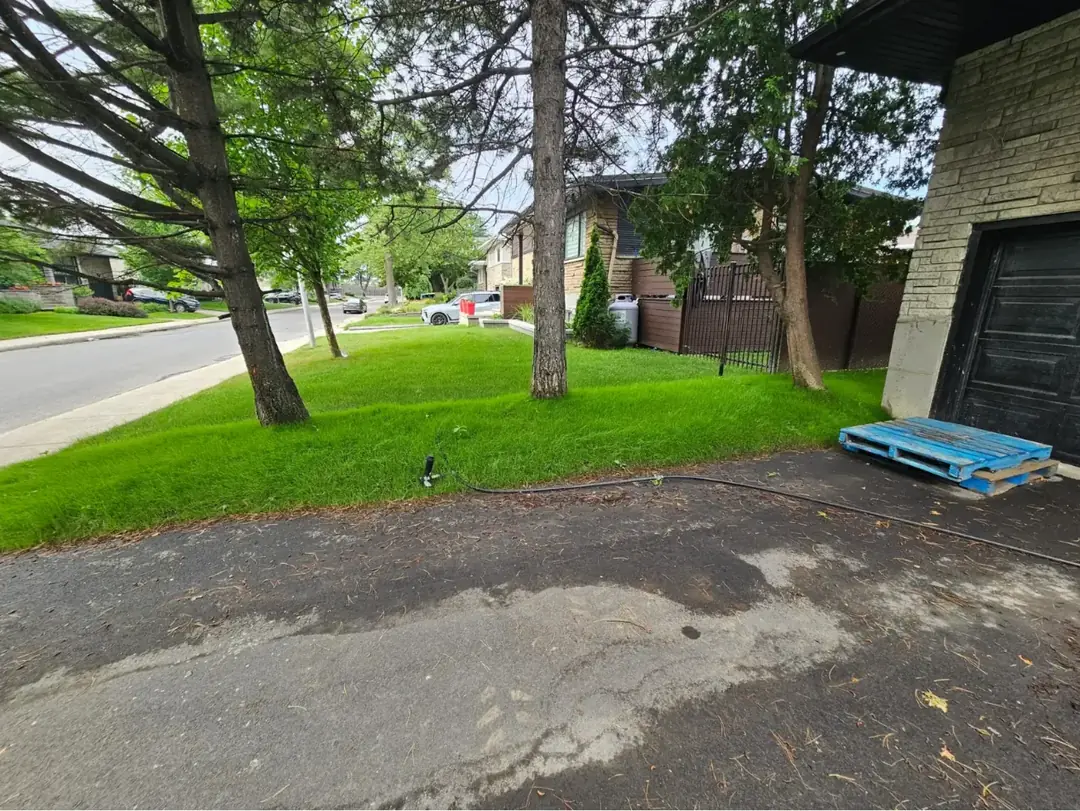
- After construction work. Foundation drain (French drain), foundation, pool, driveway or septic tank: we redo the lawn over the whole disturbed area, with no visible patches or seams. See our guide Redoing the lawn after work (in French).
- Worn-out lawns. Overrun with weeds or damaged by white grubs: we redo it completely on prepared soil. If it's only thin, overseeding after aeration may be enough.
- Large properties. The bigger the area, the wider the price gap with sod.
What we spray on your property
The mix is prepared and stirred in the tank of our hydroseeder, so it stays uniform from the beginning to the end of the application. It contains six components:
- the seed, chosen for your soil, sun exposure and how you use the property;
- the fibre mulch, which holds moisture around the seed and protects it from wind, birds and runoff;
- the fertilizer, which helps roots establish quickly;
- a tackifier, which binds the mulch to the soil against wind and runoff;
- the biostimulants (humic substances, seaweed extracts), whose effect on young plants varies by product;
- the water, which carries everything and starts germination.
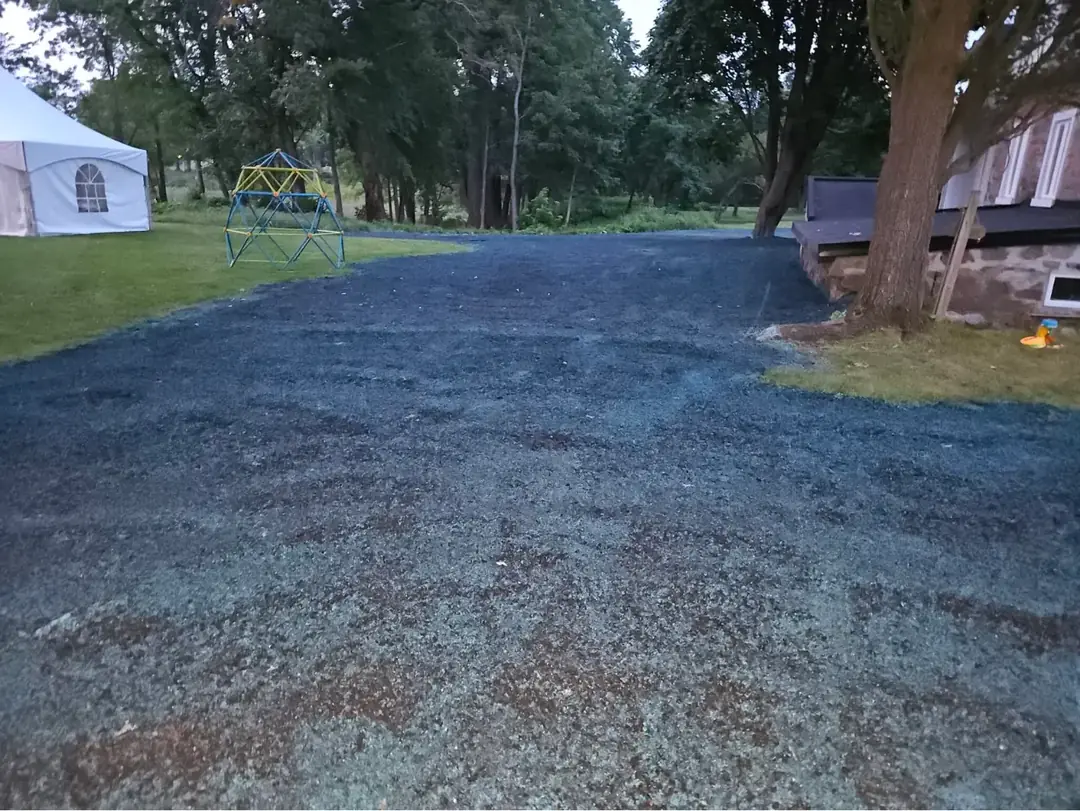
The mulch is dyed green: you can see right away whether every square metre is covered. Its fibres are biodegradable.
Choosing the seed
There's no perfect mix for every property. We start from your situation:
| Your property | What we favour |
|---|---|
| Full sun | Kentucky bluegrass for density, perennial ryegrass for quick germination, fescues for hardiness |
| Shade or partial shade | More fine fescues, which tolerate the lack of light under trees better |
| Heavy use | Grasses that stand up to foot traffic: kids' play, dogs, ball games |
| Low maintenance | A mix with micro-clover, which supplies part of its own nitrogen and needs less fertilizer |
To compare the species one by one, in shade, in summer and in winter, read our guide Lawn grasses in Quebec (in French).
Soil preparation, the part that doesn't forgive
Good soil matters more than any seed mix. Before the application, you need:
- at least 10 cm (4 in.) of good lawn soil, after settling, with no clumps of clay, rocks or construction debris;
- grading that moves water away from the house and leaves no low spots where it collects;
- a loosened, raked surface, so the seed makes good contact with the soil.
On a new property, the layer of soil delivered is often thin or compacted by machinery. Send us photos: we'll tell you honestly whether more is needed, and we can come and do all the preparation for you. Detailed guidelines (pH, slope, rocks, compaction) are in our guide Preparing your property for grass.
The first few weeks
- Day 1Application, then short, frequent watering
- Days 7 to 10First sprouts, if the soil has stayed moist
- Weeks 4 to 6First mowing when the grass reaches 8 to 10 cm
What comes next, week by week, is in our new lawn care guide. So you don't have to worry about watering, we can install and monitor a temporary system.